Microfiber: The science of lint-free cleaning
The reason microfiber cloths clean without leaving lint isn’t some marketing gimmick—it’s rooted in a clever bit of materials science that most people never think about. When you run a finger over a high-quality microfiber cloth, it feels almost velvety, but under a microscope the surface looks like a forest of split polymer tips, each one thinner than a human hair. That’s where the magic happens.
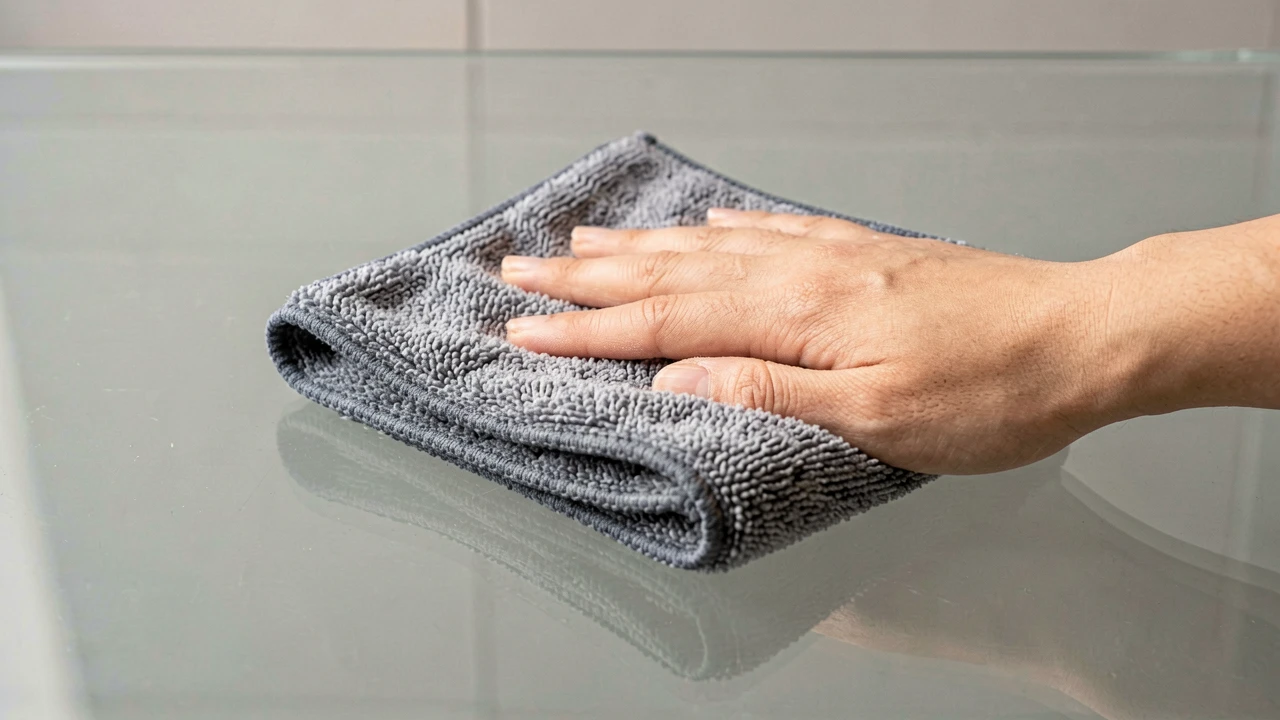
What makes microfiber truly lint-free?
Standard cotton or blended fabrics shed fibers because their yarns are twisted from short staple fibers that break loose with friction. Microfiber, by contrast, is made from continuous filaments of polyester and polyamide (usually nylon) that are split during manufacturing into dozens of microscopic wedges. These splits create an enormous surface area—up to 40 times that of a conventional cotton fiber of the same diameter. But the key is that the filaments are endless: they don’t have ends to snap off and leave behind. Even after hundreds of washes, the structure remains intact, so no lint escapes.
The electrostatic and capillary double act
Lint-free cleaning isn’t just about not shedding—it’s also about trapping particles rather than pushing them around. The split fibers create narrow channels that generate strong capillary action, pulling liquid and grease into the cloth’s interior. At the same time, the friction of wiping produces a static charge that attracts dust and fine debris like a magnet. A 2019 study in the Journal of Textile Engineering measured that microfiber cloths capture over 99% of particles down to 0.3 microns from dry surfaces, while cotton cloths recapture only about 30% after a single wipe. That’s why a single pass with a microfiber cloth on a glass table leaves no haze, while a cotton rag often leaves a thin film of lint and oil.
Why not all microfiber is created equal
Walk into any dollar store and you’ll see “microfiber” cloths that feel like cheap felt and shed worse than a shedding cat. The difference comes down to three factors: filament count, split ratio, and weave density. Industrial-grade cloths used in cleanrooms have a filament count of 72 or higher per bundle, with a polyamide-to-polyester ratio around 20:80 to maximize both absorbency and electrostatic pickup. Budget versions often skip the splitting step entirely, leaving the filaments round and solid. Those round fibers can still pick up dust, but they lack the wedged edges that physically scrape off stubborn residues without scratching, and they don’t hold onto particles—so they release them back onto the surface, often leaving a faint gray smear.
The real-world test: glass and screens
If you’ve ever wiped a smartphone screen with a paper towel, you know the micro-scratches it leaves. Microfiber’s wedge-shaped filaments are softer than glass (polyester has a Mohs hardness of around 2.5, while glass is 5.5+), meaning they can lift oils and smudges without ever gouging the surface. The split structure also ensures that once a particle is trapped, it stays trapped—no secondary scratching from dragging grit across the screen. That’s why every lens cleaning kit and screen protector manufacturer recommends microfiber: it’s physically impossible for the cloth to generate lint, and it cleans down to the molecular layer.
Care and longevity: don’t kill the wedges
The science doesn’t stop at manufacturing. Harsh detergents, fabric softeners, and bleach can melt the polyamide splits back together or coat the fibers with waxy residues that neutralize static charge. After a few washes with softener, that once magical cloth becomes just a limp rag that pushes dirt around. The fix is simple: wash with mild soap only, no fabric softener, and air dry or tumble on low heat. Properly cared for, a quality microfiber cloth can outlast dozens of cotton rags while never once leaving a lint trail behind.
That’s the science. It’s not hype—it’s physics, chemistry, and a little bit of textile engineering that turns a humble square of fabric into the most effective lint-free cleaning tool we’ve got.
Join Discussion
huh didn’t know the split fiber thing
Wait so the cheap ones at dollar stores aren’t even real microfiber?
been using the same 3 cloths for like 5 years no lint ever
the static charge part makes so much sense now
Does fabric softener really ruin it that fast? Asking bc I definitely use it
I thought it was just marketing bs honestly
the glass test – yeah paper towels are the worst for phone screens
wait what Mohs hardness? that’s actually kinda cool
so that’s why my “microfiber” from target leaves streaks
never thought about the science behind it honestly
ooh 40x surface area that’s wild
just checked my cloth… yeah I’ve been using softener. oops
the wedge shape really explains why it doesn’t scratch
ok but does anyone actually wash these properly lol
wait 99% of particles down to 0.3 microns? that’s insane