Fabric vs Plastic Which is Better?
So you’re staring at a shelf full of fabric bins and plastic totes, trying to figure out which one won’t let you down after a few months. It’s a real headache, especially when you’ve already tossed money at cheap storage that turned into saggy messes or cracked plastic lids. Let’s break it down from a regular person’s perspective, no sales pitch, just the honest scoop.
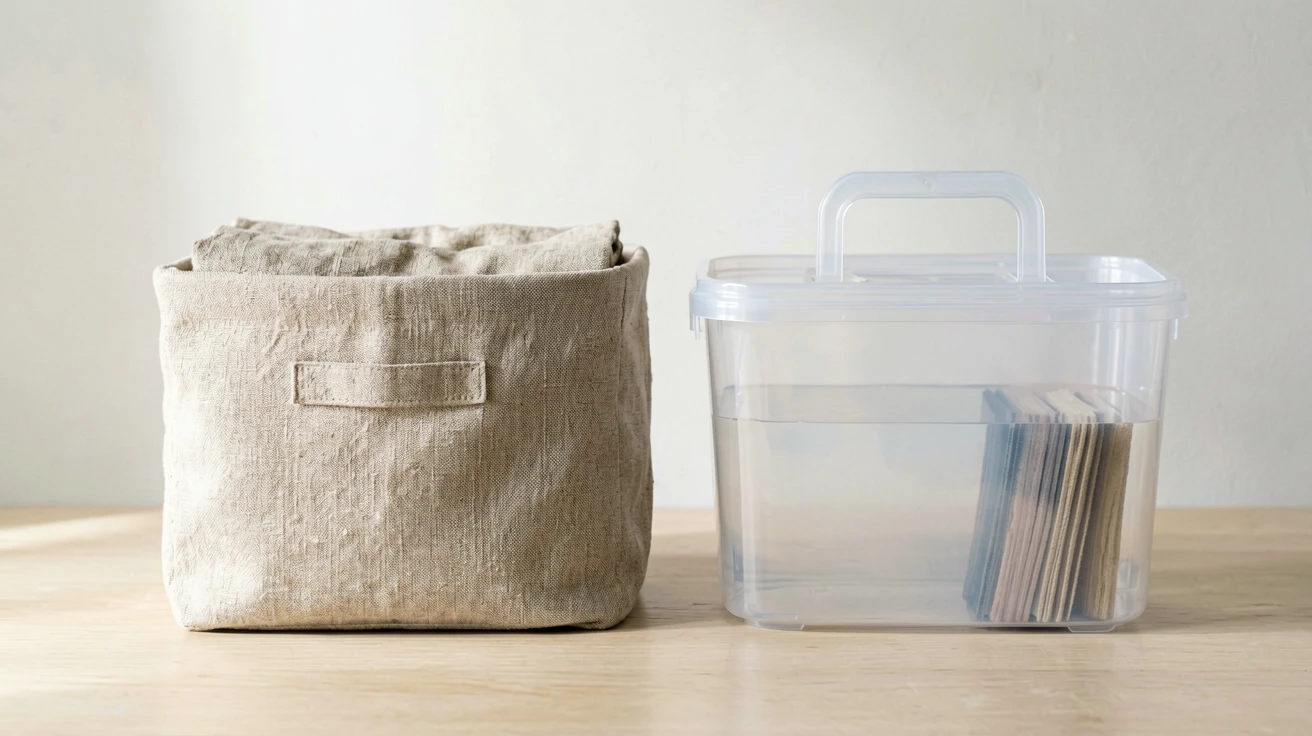
The Soft Side: Fabric Bins
Fabric storage bins are the darlings of the home organization world right now. They look cozy, come in all sorts of colors, and blend right into your bedroom or living room without screaming “utility.” But here’s the catch—not all fabric bins are built the same. The cheap ones with thin non-woven fabric and flimsy cardboard inserts? They’ll turn into wobbly pancakes after you stack a few heavy sweaters on top. You know the drill: you pull one out, and the whole tower nearly tumbles.
The good news is, there are solid options out there. Brands like SONGMICS or Household Essentials use reinforced fabric, double-stitched seams, and either thick cardboard or a hard plastic frame inside. Those can handle three or four layers of stacking without collapsing. Plus, many are machine-washable or at least wipe-clean, which is a lifesaver if you’re storing kids’ toys or dusty blankets. The downside? They cost more—think twenty-five bucks for a two-pack. And if you overfill them, the fabric might stretch out of shape over time. Also, that “breathable” thing people talk about? It’s real. Fabric bins let air circulate, so your winter coats don’t get that musty basement smell. But breathable also means dust can sneak in through the weave if the bin isn’t fully closed.
The Hard Stuff: Plastic Totes
Plastic storage is the old reliable. Clear totes let you see exactly what’s inside without opening anything, and they stack like bricks. You can pile them five high, throw them in the garage, and they won’t budge. They’re waterproof too—spill a drink on a plastic bin? Wipe it off, no stain, no odor. That’s huge for storing holiday decorations or winter boots that might still have snow stuck to them.
But plastic isn’t perfect. It’s heavy. Moving a full 30-gallon tote up and down stairs is a workout. And they’re ugly—let’s be real, nobody wants a stack of bright blue or opaque bins in their living room. They look like you’re running a mini warehouse. Also, cheap plastic lids can crack if you sit on them or if the temperature swings too much. And once they crack, they’re pretty much useless.
Which One Should You Pick?
It really depends on where you’re using them and what you’re storing. For closets or shelves inside the house, fabric bins are a no-brainer—they look nicer, they’re lighter, and they won’t scratch your furniture. Just make sure to get ones with reinforced bottom inserts and sturdy handles. If you’re storing heavy gear, seasonal decorations, or stuff in a damp basement or garage, plastic totes win. They’ll keep moisture out and handle the weight without warping.
One practical trick: mix and match. Use fabric bins for everyday items like clothes, toys, or linens in your bedroom, and keep plastic totes for the stuff that only comes out twice a year. That way you get the best of both worlds without dealing with their worst habits.
The Real Bottom Line
Honestly, there’s no universal winner. It’s like asking whether jeans or sweatpants are better—you need both, just for different occasions. If you’re about to drop cash on storage, skip the ultra-cheap stuff on either side. Spend a little more on a mid-range fabric bin with a rigid frame, or a heavy-duty plastic tote with locking latches. Your future self, the one who won’t have to dig through a collapsed pile of junk, will thank you.
Join Discussion
塑料箱防水确实好,但搬一次真让人怀疑人生😂
之前贪便宜买过那种软趴趴的布箱,结果塞满毛衣就歪了,气死人
带硬边框的布料箱真的能叠三层不塌吗?想试试