How self-cleaning slicker brushes work and why they matter
Best Pet Hair Remover Brushes for Dogs and Cats 2026
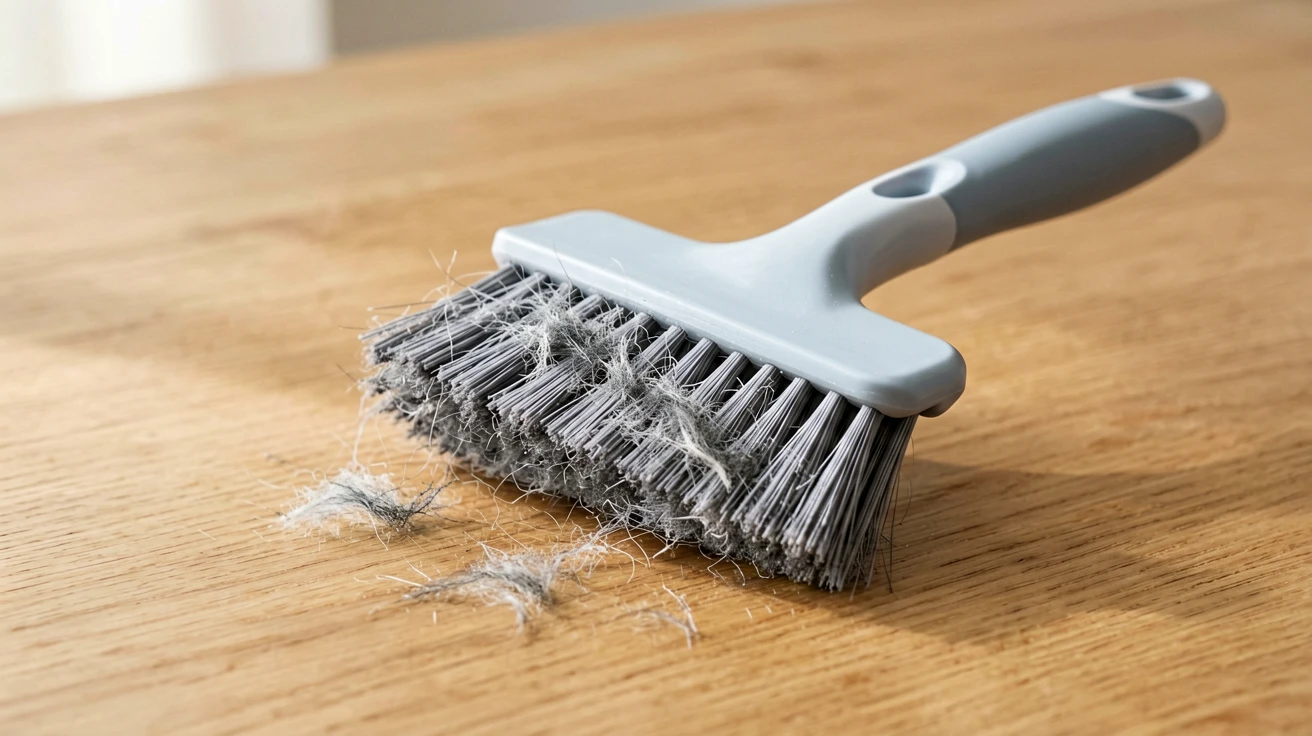
When was the last time you spent five minutes picking clumps of fur out of a slicker brush after a two-minute grooming session? That’s the dirty little secret most pet owners discover the hard way: traditional pin brushes are fantastic at trapping loose hair but terrible at letting it go. The self-cleaning slicker brush flips that script, and the engineering behind it is both elegantly simple and surprisingly effective.
The mechanism that changed grooming
At its core, a self-cleaning slicker brush works by separating the pin base from the brush head with a single mechanical action. Press a button, slide a lever, or twist a knob, and the entire grid of metal pins retracts into the brush body, pushing all trapped fur forward in a neat, compact strip. No prying, no scraping, no using a comb to dig out hair that’s wrapped around the pin roots. Some higher-end designs use a spring-loaded platform that lifts the bristles uniformly, while budget-friendly versions rely on a manual slider that shifts the pin matrix forward. Either way, the result is the same: all that loose undercoat, shed hair, and dander slides off in one smooth motion.
Why this matters more than convenience
Sure, saving 30 seconds per grooming session adds up over a year, but the real value lies in hygiene and skin health. Fur left trapped in a brush becomes a breeding ground for bacteria, yeast, and even dust mites. If you’ve ever noticed a musty smell coming from your grooming tools, that’s microbial growth at work. A self-cleaning mechanism encourages more frequent cleaning because it’s no longer a chore. And cleaner brushes mean fewer skin irritations for your pet—no caked-on dander or old oils being reapplied to fresh coat.
There’s also a practical matter of grooming effectiveness. When a brush is clogged with hair, its pins can’t penetrate to the undercoat properly. The stroke becomes shallow, and you’re essentially smoothing the surface while leaving tangles below. With a clean brush each time, every pass removes fur that would otherwise end up on your couch, carpet, or in your morning coffee.
The hidden win for long-haired breeds
Owners of double-coated dogs or fluffy cats have another reason to love self-cleaning designs: the speed factor. Long-haired breeds shed in massive clumps that can completely choke a standard brush after just two or three strokes. Without a quick-release mechanism, you’d be stopping every 20 seconds to pick hair off the pins, and grooming a husky or a Maine Coon would turn into a 45-minute endurance test. The self-cleaning feature compresses that downtime dramatically, letting you focus on technique rather than cleanup.
It’s not a gimmick—it’s a fundamental rethinking of how brush and fur interact. And once you’ve used one, going back to a regular slicker feels like stepping into the dark ages.
Join Discussion
Finally someone explains why my old brush smelled so bad 😂
Does the retracting mechanism ever pinch the dog’s skin?
Spent 10 mins cleaning the brush after 2 mins of brushing. So done with that.
Got one for my husky last month. Life-changing honestly. Grooming went from a nightmare to actually kinda pleasant.