Understanding PD Fast Charging and Battery Conversion Rate
When you grab a power bank rated at 10,000mAh, you probably expect it to deliver roughly that much juice to your phone. But the harsh reality is that you're lucky to get 7,000mAh out of it. That gap isn't fraud—it's physics, and it's tied directly to two concepts most users misunderstand: PD fast charging and battery conversion rate. Let's break down what's actually happening inside that little brick.
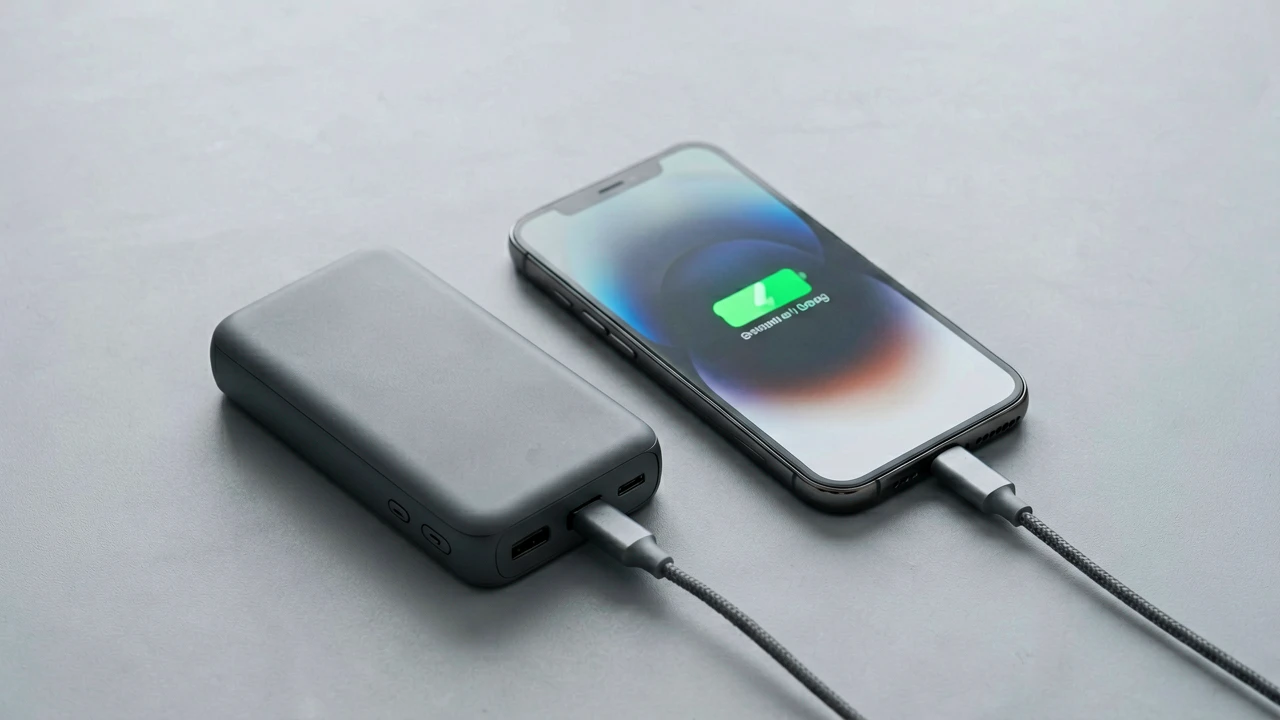
What PD Fast Charging Actually Does
USB Power Delivery, or PD, isn't just about shoving more watts into your device. It's a smart negotiation protocol between the charger and the device. Instead of the fixed 5V/2A that older USB standards used, PD allows the power source to switch to higher voltages like 9V, 15V, or even 20V, and adjust current accordingly. The key benefit isn't raw speed—though that's a nice side effect—it's efficiency. Higher voltage reduces the current needed for the same wattage, which in turn cuts resistive losses in the cable and the internal circuits. For a power bank, that means less energy wasted as heat during the transfer, directly boosting the conversion rate.
But here's the catch: not all PD implementations are equal. A "PD-compatible" power bank might only support 18W or 30W, while a laptop demands 60W. If the negotiation fails, it falls back to standard 5V charging, which is slower and less efficient. That's why you see some banks claiming "high conversion rate" but still feel underpowered—the PD handshake can be finicky, especially with cheap controllers.
The Conversion Rate: Where the Watts Disappear
Battery conversion rate is the ratio of actual energy you can pull out of a power bank to the energy stored in its cells. A typical lithium-ion cell operates at around 3.7V, but USB output is typically 5V (or higher with PD). To step up that voltage, the power bank uses a boost converter circuit. That conversion is never 100% efficient—usually 80% to 93% for decent units. The lost energy becomes heat.
So if you have a 20,000mAh power bank with a 3.7V cell, the stored energy is 74Wh (20Ah × 3.7V). At 5V output, the theoretical maximum available energy is still 74Wh, but at 5V that translates to only 14,800mAh. Then apply the 85% conversion efficiency, and you're down to about 12,580mAh. That's a 37% loss from the labeled capacity. Most brands already factor this into their "rated capacity" labels, but shady ones don't.
PD fast charging can improve this number slightly because higher output voltages (9V, 15V) reduce the current and thus the I²R losses in the boost converter. But the trade-off is that the voltage conversion itself still has losses. A well-designed PD power bank with a high-quality controller and low-resistance MOSFETs can hit 92% conversion efficiency at 20V output, versus maybe 85% at 5V.
Why Some Power Banks Feel Like a Rip-off
The biggest culprit behind poor real-world performance isn't the battery cells—it's the circuit design. Cheap power banks use generic boost converter chips with high quiescent current (the power they consume just being on) and poor thermal management. Even when idle, they bleed charge. And during fast charging, if the thermal protection throttles the output, you get slower speeds and more wasted energy. That's why you'll see reviews saying "it charged my phone once and then died"—the conversion rate was below 60%.
Another overlooked factor is the cable. A thin, long USB-C cable with high resistance can drop half a volt or more under PD current, causing the power bank to boost output voltage to compensate, which increases losses. Quality PD cables have thicker gauge wires and built-in e-markers to handle up to 5A.
How to Read Between the Specs
When evaluating a power bank, ignore the "10,000mAh" boast on the front. Look for a "rated capacity" or "typical output capacity" in the fine print. For example, Anker usually lists "6,400mAh at 5V" for their 10,000mAh models. That's honest. Also check if the PD output supports the voltage levels your devices actually need. A power bank that can do 9V/3A (27W) is fine for most phones, but if you plan to charge a MacBook Air, you'll want 20V/3A (60W) or more.
Finally, remember that conversion rate isn't static—it varies with load. A power bank might hit 90% efficiency at 5V/1A but drop to 82% at 5V/3A because of increased heat. PD fast charging at higher voltages can actually be more efficient at higher power levels because the lower current reduces heat. That's counterintuitive, but it's why modern top-tier banks can outperform older ones even with the same cell capacity.
So next time you see a promo claiming "ultra-high conversion rate," take it with a grain of salt. Look for real test results, check the rated output capacity, and remember: PD isn't magic, it's just better engineering.
Join Discussion
No way a 10,000mAh bank gives that much—my cheap one barely charged my phone twice, total scam vibes.
Why do manufacturers never list the “at 5V” number clearly? Curious if a 20V PD bank really helps my old phone battery life.🤔
Used an Anker 10k and it actually matched the rated output better than some knockoffs, took forever to heat up too—换牌子真的有差别。