Does Memory Foam Guarantee All-Day Comfort?
How many times have you slipped on a pair of memory foam shoes expecting cloud-like comfort, only to feel your feet aching by midday? That gap between marketing promise and real-world experience reveals a crucial truth: memory foam is not a universal comfort guarantee. It’s a material with specific strengths and equally specific limitations. Understanding those limits is what separates a wise purchase from a regretful impulse buy.
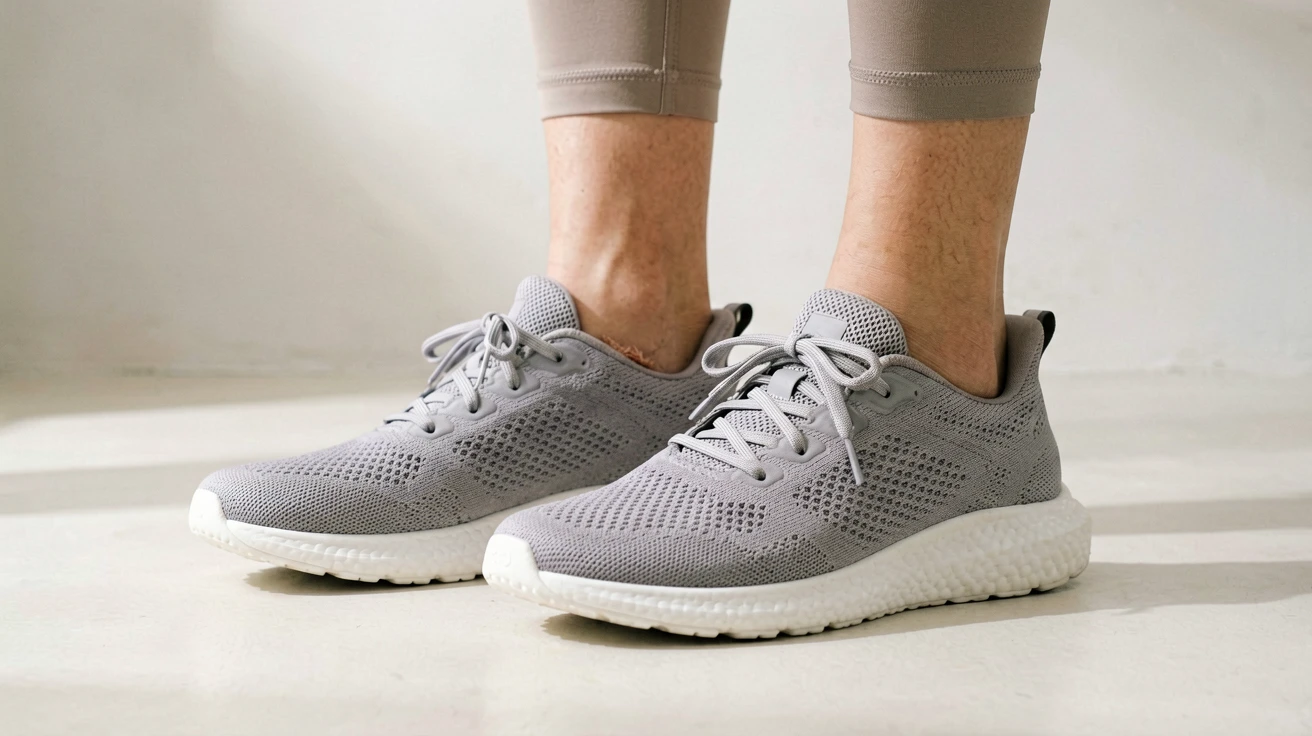
The Science Behind Memory Foam
Memory foam was originally developed by NASA to cushion astronauts during takeoff. The magic lies in its viscoelastic nature—it responds to heat and pressure by conforming to the body’s contours. In footwear, this means the insole molds to your unique arch shape and weight distribution, theoretically spreading load evenly. But here’s the catch: that “theory” only works under certain conditions. If the foam is too soft, you sink in and lose support. If it’s too firm, it never conforms. The real variable is density.
The Density Factor
Not all memory foam is created equal. Low-density foam (below 50 kg/m³) offers that instant “sink-in” sensation many people love, but it degrades quickly—within 3–4 months of daily walking, it compresses permanently and stops returning to shape. High-density foam (above 80 kg/m³) holds up for 12–18 months, providing consistent cushioning without bottoming out. Yet even high-density foam fails when paired with poor arch support. A memory foam insole that collapses under the metatarsal bones will cause forefoot pain regardless of its initial plushness. The industry rarely publishes density specs, so consumers are left guessing.
Temperature Sensitivity
Memory foam’s performance changes with ambient temperature. In cold weather—below 60°F—the foam stiffens dramatically, feeling like a hard slab under your heel. In hot weather, it softens to the point of instability. This means a shoe that feels dreamy in an air-conditioned store can become a torture device during a summer afternoon walk. Brands that claim “all-day comfort” often test in climate-controlled labs at 72°F, not your typical commuting conditions. Look for shoes with open-cell memory foam or blended foam layers (e.g., memory foam plus EVA) to mitigate temperature swings.
Beyond the Foam: Support Matters
Here’s the uncomfortable truth: memory foam alone cannot fix poor foot biomechanics. A flat arch will still pronate without a firm medial support. A high arch will still strain without a metatarsal pad. Memory foam molds to the existing shape—it doesn’t correct misalignment. That’s why specialized insoles for overpronation use rigid plastic shells with a thin memory foam topper, not solid foam blocks. In the original article’s “Memory Foam Slip-On Casual Sneakers,” the memo that “minimal arch support for high-intensity sports use” hints at this limitation. For all-day walking, you need a shoe that combines memory foam cushioning with a structured heel cup and arch cradle.
Real-World Comfort: The Verdict
So does memory foam guarantee all-day comfort? No, it only provides a foundation. The guarantee depends on the foam’s density, the shoe’s overall support system, your foot type, and the environmental conditions. A well-engineered memory foam shoe—with adequate density, temperature-resistant blend, and proper arch support—can indeed deliver extraordinary comfort for 8+ hours. But a cheap, low-density foam slip-on will leave you limping by 2 PM. Next time you see “memory foam” on a tag, ask: what else is in that sole?
Join Discussion
试过几双记忆棉鞋,底子太软走一天脚底板疼,还是得看密度。
冬天穿记忆棉鞋出门,脚底硬邦邦的像踩砖头,有同感的吗?
那如果只有一块钱预算,买高密度记忆棉还是普通EVA?
我买的那个便宜货三个月就塌了,真是一分钱一分货。
文中说温度低于60°F变硬,夏天又软,看来得买混合材质的。
哈哈,商场试穿是天堂,出门走两小时就现原形了😂