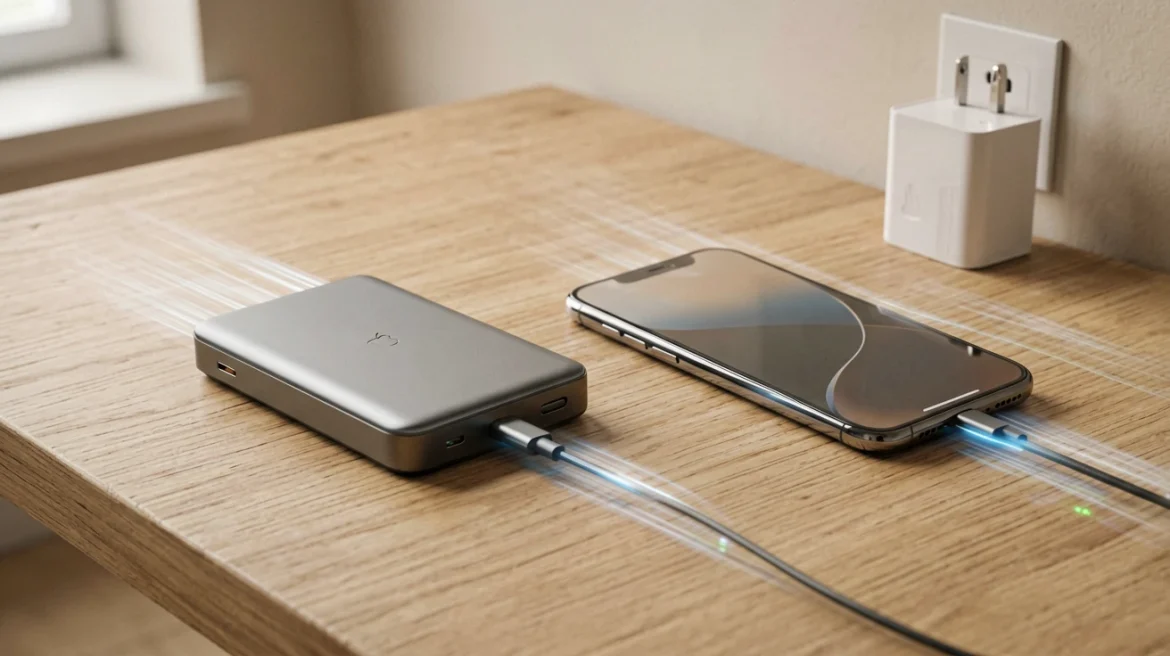

Meta Description: Compare wireless portable power banks and wall fast chargers from charging speed, portability, safety, usage scenarios and long-term cost, find out which charging accessory better fits your daily habits.
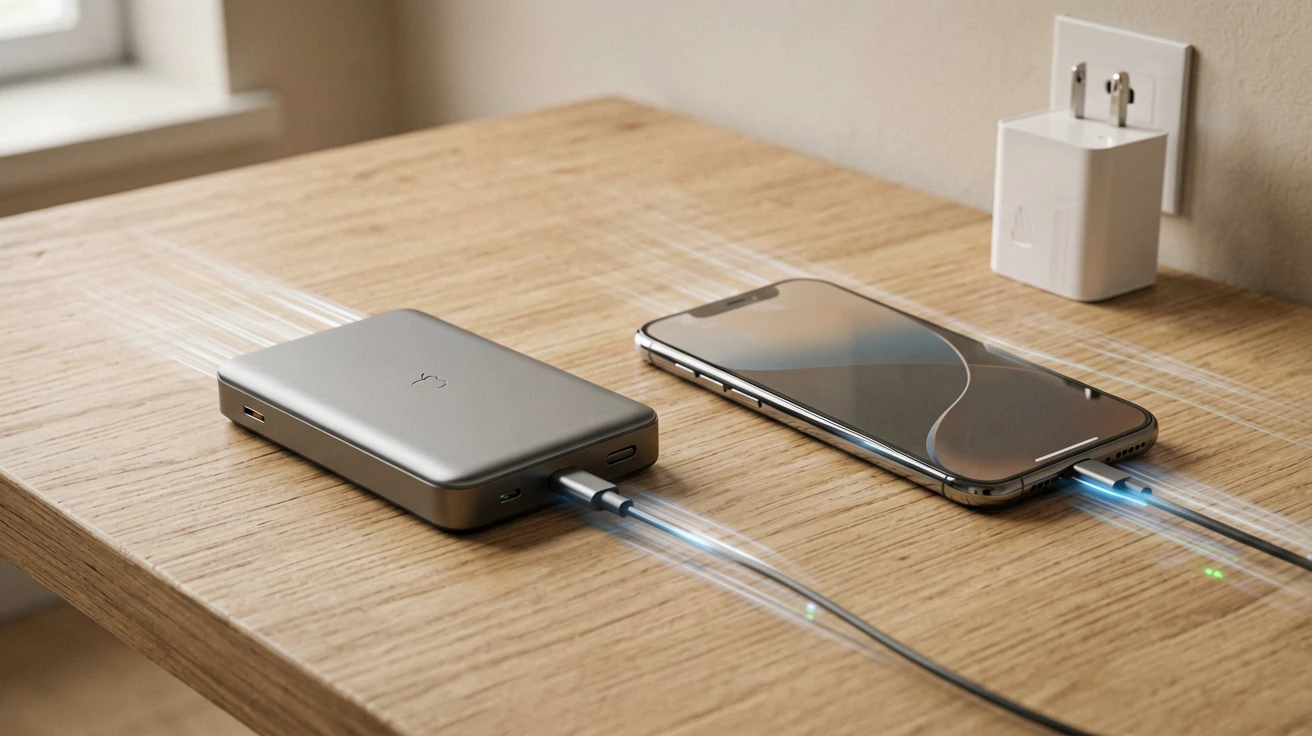
Introduction
Mobile device charging accessories are essential daily digital gadgets, and most users will choose between portable power banks and wall fast chargers. One solves outdoor no-socket power anxiety, while the other guarantees stable high-speed charging at home and office. Many consumers blindly purchase high-capacity power banks only to carry bulky weight daily, or buy multi-port wall chargers but face travel charging inconvenience. This comparison comprehensively analyzes the core advantages, usage limitations, safety risks and long-term use costs of the two mainstream charging devices, helping users match the most suitable charging tool according to their activity scenarios.
Core Comparison Table: Wireless Portable Charger VS Wall Fast Charger
| Comparison Item | Wireless Portable Power Bank | Wall Plug Fast Charger |
|---|---|---|
| Power Supply Mode | Built-in lithium battery, charge first then discharge to devices | Direct AC wall socket power input, real-time conversion output |
| Maximum Charging Speed | Up to 25W portable fast charge, limited by battery discharge protocol | Up to 65W high-power PD fast charge, supports flagship phone/laptop flash charging |
| Portability Level | Pocket/handbag portable, no fixed socket restriction | Must rely on wall power socket, cannot be used outdoors without power supply |
| Simultaneous Charging Quantity | 2–4 device simultaneous output, limited by total battery power | 3–6 multi-port simultaneous stable output, no power attenuation |
| Safety Risk Point | Battery aging leads to capacity attenuation, improper overcharging may have heat risk | Only circuit conversion, no energy storage unit, lower fire hazard probability |
| Long-Term Service Life | 300–500 charge-discharge cycles, capacity gradually decays after 2 years | No consumable battery, stable circuit service life up to 5+ years |
| Unit Usage Cost | High one-time price, battery aging needs full equipment replacement | One-time purchase with almost no subsequent use cost |
| Typical Applicable Scenarios | Commuting, travel, camping, outdoor business trips, emergency power backup | Home bedroom, office desk, hotel fixed accommodation multi-device centralized charging |
In-Depth Feature Comparison Analysis
1. Wireless Portable Power Bank: Core Pros & Cons
Advantages
- Socket-free emergency charging: the biggest core advantage, completely solving outdoor mobile phone, earbuds, smart watch power shortage trouble during travel and commuting;
- Compact lightweight models support wireless magnetic suction charging, compatible with mainstream smartphone wireless charging functions, no repeated plugging and unplugging damage to device interfaces;
- Most power banks come with LED digital power display, real-time remaining power reminder to avoid sudden power failure during important calls and navigation;
- Wide compatibility with all USB digital devices, can charge mobile phones, Bluetooth headsets, cameras, handheld game consoles and other portable gadgets.
Disadvantages
- Fast charging power is restricted by battery discharge protection, cannot reach the maximum flash charging speed supported by mobile phones, full charging time is longer than wall chargers;
- Lithium batteries belong to consumable parts, with irreversible capacity attenuation after repeated charge and discharge; after 2 years of frequent use, the available capacity will drop below 70% of the original;
- Large-capacity power banks have bulky weight, increasing daily bag carrying burden, and cannot be checked in air luggage, only allowed to be carried on board;
- High-temperature environment such as summer car interior will accelerate battery aging and bring potential overheating safety hazards.
2. Wall PD Fast Charger: Core Pros & Cons
Advantages
- Unrestricted high-power fast charging, supports mobile phone peak flash charging, and can even power thin laptops, greatly shortening device full charging waiting time;
- No built-in energy storage battery, only circuit conversion components, stable performance, long service life and almost no later maintenance cost;
- Multi-port wall chargers can centrally charge mobile phones, tablets, earbuds, smart watches at the same time, eliminating the trouble of plug row insufficient jacks;
- Intelligent current distribution technology automatically matches the safe charging power of different devices, effectively protecting the battery health of low-power small digital products.
Disadvantages
- Strictly dependent on wall AC power sockets, completely unable to cope with outdoor emergency power demand, limited to fixed indoor use scenarios;
- Multi-port high-power chargers have larger plug volume, easy to occupy adjacent socket positions on the power strip;
- No emergency power reserve function, once the home power is cut off, cannot provide any charging service for electronic equipment;
- High-power charging will produce slight surface heat when multiple devices are charged at full load, need to avoid covering fabrics during use.
Final Buying Suggestion
Choose Wireless Portable Power Bank If: You often commute long distances, travel by plane/car, go camping or outdoor photography, frequently face no fixed charging socket scenarios, and need emergency power backup for mobile devices.
Choose Wall PD Fast Charger If: Your daily activity range is mainly home and office, you own multiple digital devices that need centralized charging, pursue the fastest charging efficiency and long-term stable use without frequent replacement.
Frequently Asked Questions
Q: Does wireless charging of power banks damage the phone battery?
A: Qualified wireless portable chargers have built-in overvoltage and temperature protection chips, which will not damage mobile phone batteries when used within the rated power range.
Q: Can a 65W wall fast charger charge low-power devices like Bluetooth earbuds?
A: Intelligent PD wall chargers automatically identify device required current, will not output high power to small devices, effectively protecting earbud battery safety.
Q: Which charging accessory has higher long-term cost performance?
A: Wall fast chargers have no consumable loss, with higher comprehensive cost performance for long-term indoor fixed use; power banks are essential one-time investment for outdoor frequent travelers.


Good comparison – the battery aging on power banks is real, happened to mine after 18 months.
25W max wireless is kinda disappointing, my wired charger does 65W no problem.
So if I mostly work from home, wall charger is the better buy long term?
Wall charger is the way to go if you’re mostly at home, batteries degrade too fast.
Can a 25W power bank actually charge a laptop in a pinch? Or is that just wishful thinking?
That 25W limit on wireless is a dealbreaker for me, I’m too used to wired speeds.
Had a power bank swell up after a year in my glovebox—never again. Wall chargers all the way now.
My power bank is basically a paperweight now, holds like 20% charge. Wall chargers are forever.
Finally someone mentions the weight issue, lugging a heavy brick around is no joke.
25W is fine for topping off overnight, not everyone needs race-car speeds.
Just here to see people argue about battery safety lol 😂
Same! Popcorn ready 🍿
Wait, so I shouldn’t leave my power bank in the car during summer?
Solid comparison, helps me decide what to toss in my carry-on for the trip tomorrow.
Wait, the article says wall chargers have no consumable loss—what about the cable wearing out? 😅
Wall chargers are boring but reliable. Power banks just die too fast.
Brought a 20,000 mAh power bank on a hike, regret the extra pound in my bag.
I get that wireless charging is convenient, but the heat buildup worries me more than anything.
Heat is the enemy, honestly. I only use wireless for overnight charging on my nightstand.
Anyone else just use the charger that came with their phone and call it a day?
Magnetic wireless is the only way to go, cables are so 2015.
What’s the real-world lifespan difference if you only use a power bank once a week?
My 65W wall charger tripped the breaker once when I plugged in three iPads at once, not fun.
Another article ignoring how messy cables get—give me a magnetic wireless bank any day.
Power bank for emergency, wall charger for daily—that’s the real takeaway here.
Pretty straightforward, but I’d love to see real test numbers on charging speeds.
Same here, numbers would be nice but the general comparison is enough for me to decide.