Why are cheap power banks a safety risk?
You know that sinking feeling when your phone hits 10% and you grab the cheapest power bank from the gas station counter? Yeah, we've all been there. That $5 impulse buy feels like a win—until it starts hissing in your backpack or, worse, turns your pocket into a personal sauna. Turns out, bargain-bin battery packs aren't just sketchy; they're genuinely dangerous.
What's Actually Inside That Cheap Shell?
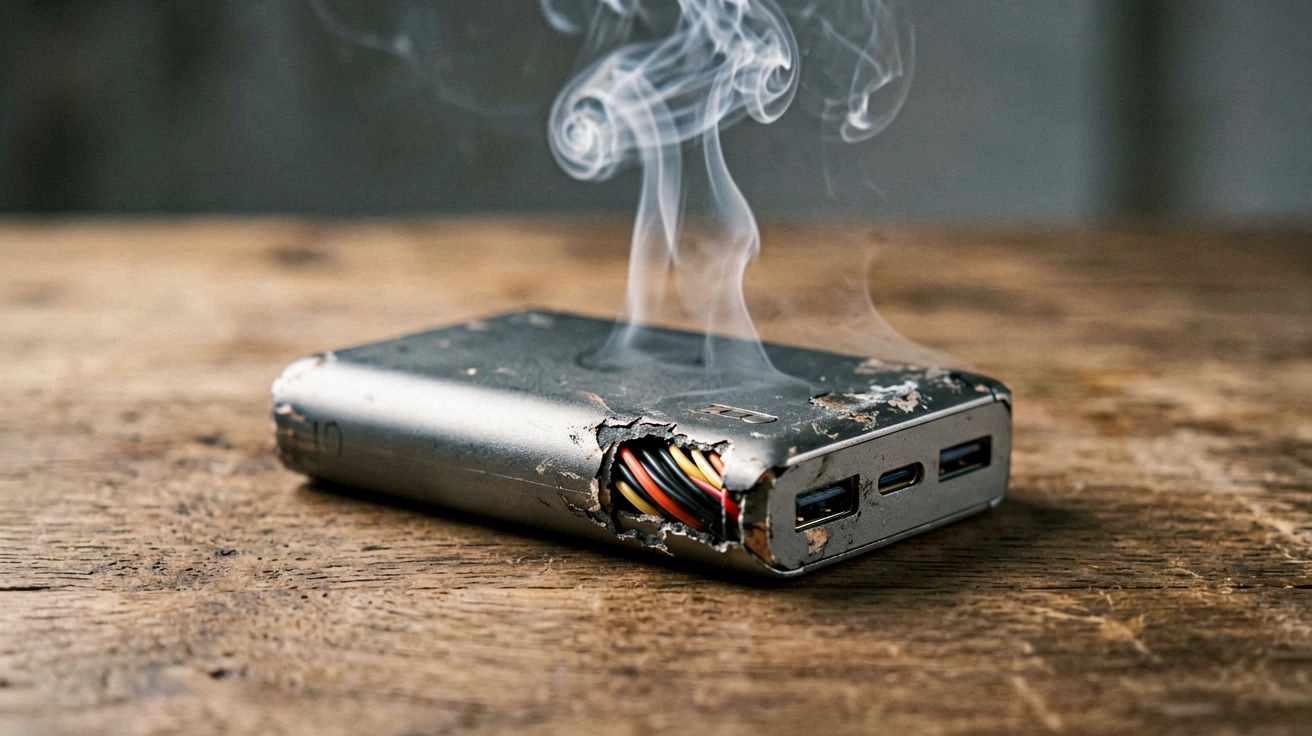
Pop open a no-name power bank and you'll usually find the electronic equivalent of mystery meat. Manufacturers cutting corners love "refurbished" lithium cells pulled from old laptops or worse—cells that failed quality checks but got repackaged anyway. These rejects have unstable chemistry. One tiny puncture, one overheated evening in a hot car, and you've got thermal runaway: a fancy term for "battery that won't stop burning."
Real talk—legitimate brands use Grade A lithium polymer cells with built-in pressure vents and multi-layer protection circuits. Budget options? They often skip the protection circuit entirely or use a $0.30 chip that barely pretends to regulate voltage. When overcharging happens (and it will), there's nothing stopping that cell from ballooning, leaking, or igniting.
The Numbers Don't Lie
Here's where it gets wild. Consumer safety reports show power banks are responsible for hundreds of fire incidents annually, and cheap imports dominate that statistic. In 2023 alone, UK consumer watchdogs flagged over 60 budget power bank models for overheating risks—many sold through major online marketplaces with fake CE safety marks stamped right on the plastic.
That "20,000mAh" label? Often pure fiction. Cheap units frequently contain 8,000mAh cells with inflated marketing. Worse, the conversion efficiency might hit 60% versus 90%+ from quality brands. You're carrying dead weight that barely charges your phone once, let alone the promised four times.
The Hidden Costs of "Saving" Money
Ever notice how budget power banks seem to die after six months? The charging cycles on garbage cells degrade fast—sometimes 50% capacity loss after 100 uses. Suddenly that "deal" costs more per charge than a premium option that lasts years.
Then there's the device damage angle. Inconsistent voltage output fries phone charging circuits. I've heard from repair shops that cheap power banks are silent killers—customers bring in "broken" phones when really, months of dirty power from a $10 brick slowly degraded the battery management system.
Spotting the Real from the Fake
Honestly? It's harder than it should be. Counterfeiters have gotten scary good at cloning Anker and Xiaomi packaging. But a few tells remain: weight (quality cells are denser), port alignment (sloppy manufacturing shows), and that satisfying click of proper assembly. If it feels hollow or the ports wiggle, walk away.
Price is the simplest filter. Quality 10,000mAh power banks cost $15-25 to manufacture. Anything retailing below that? Something's being sacrificed—and it's usually safety margins.
The Bottom Line
Nobody's saying you need a $100 power bank. But that $8 special? You're gambling with more than wasted money. Lithium batteries are essentially controlled explosives in plastic cases—engineering and quality control matter enormously.
Next time you're staring at that convenience store rack, maybe pause. Your phone can survive a dead battery. Third-degree burns from a pocket fire? Not so recoverable.
Join Discussion
Got me checking my gas station purchase now… definitely not sleeping tonight 😂
Bought one of those $10 “20,000mAh” things, lasted like 3 months then started bulging. Scared to throw it away honestly
Wait so basically ANY cheap power bank is a fire hazard? That’s kinda terrifying